You don’t have to understand the inner complexity of lasers to reap their advantages. A basic understanding is all you need to grasp the workings of laser and light therapy machines that someday may resurface the wrinkles on your face or remove your unsightly veins.
Laser and light treatments at Nu Vela Laser Medical Spa are offered under the medical direction of Raffi Dishakjian, MD.
Laser and Light Therapy at a Glance
- Laser: a narrow, highly focused, and extremely intense beam of light. Each laser emits light having a single color or wavelength.
- Why wavelength matters: it determines which component of the skin (melanin, hemoglobin, or water) will absorb the radiation and how far into the skin laser light will penetrate.
- The three variables: wavelength, power, and pulse duration, when strategically selected and combined, provide a remarkable degree of precision in targeting a certain skin component.
- IPL (Intense Pulsed Light): works much like a laser, but instead of having just one wavelength of light, IPL machines produce a spectrum of light made up of a range of wavelengths. Such devices often use special filters to remove unwanted wavelengths.
- IPL or laser: IPL devices are more versatile, since a single machine may be suitable for treating a number of different conditions. Lasers remain superior when it comes to high specificity and precise targeting of the skin component.
- Medical director: Raffi Dishakjian, MD, who founded Nu Vela Laser Medical Spa in 2005.
Laser Technology Simplified
The concept behind the modern-day laser can be traced to Einstein. Unlike a light bulb, a laser is a narrow, highly focused, and extremely intense beam of light with unique qualities. The color of the light (or its wavelength) emitted by a laser is determined by the substance (medium) that lies within the laser’s inner chamber.
Lasers are named after the solid, liquid, or gas substance, which is used to generate the beam of light. For example, if the medium is solid ruby crystal, as in the case of a ruby laser, red light is emitted. And if it’s a gas such as argon, blue-green light is emitted.
Each laser emits light having a single color or wavelength. The color of a laser beam is determined by its wavelength: two lasers that emit the same wavelength of light emit the same color.
There are also lasers used for cosmetic purposes that do not produce colored beams. The wavelengths of these lasers fall in the infrared (wavelength longer than red light, 700 nm) region that the human eye cannot see.
Lasers in Cosmetic Surgery
Each laser light, characterized by its wavelength, represents a key designed to open only one lock. In cosmetic surgery, wavelength determines which component of the skin (melanin, hemoglobin, or water) will absorb the radiation and how far into the skin laser light will penetrate.
The ideal laser to affect a given target is the one maximally absorbed by that target. For example, a red substance like hemoglobin, which reflects red light, will maximally absorb green light. Accordingly, a green laser beam will selectively target the hemoglobin found in the skin.
The other physical properties of cosmetic lasers that determine their effectiveness are power and pulse duration. These determine how much laser energy is imparted to the skin.
A cosmetic application of a laser is very demanding. To be useful and obtain the best possible results, the laser must be able to improve the skin texture and remove or destroy the unwanted component without damaging the overall structure of the skin. The three variables—wavelength, power, and pulse duration—of a laser machine, when strategically selected and combined, will provide a remarkable degree of precision in targeting a certain skin component and therefore give the best result.
Difference Between IPL and Lasers
IPL (Intense Pulsed Light) is a gentle photo-rejuvenation and skin treatment device that emits powerful bursts of light energy. The light works much like a laser, but instead of having just one wavelength of light, IPL machines produce a spectrum of light made up of a range of wavelengths. Usually the better the machine, the broader the wavelength range.
To improve targeting and specificity, such devices often use special filters to remove unwanted wavelengths and keep only those in the required range. Depending on the filter used, the wavelengths are selected to target a particular skin condition or sign of aging.
Since the same IPL device can be used with different wavelength ranges, a single machine may be suitable for treating a number of different conditions by using a different filter and intensity settings. This makes IPL devices more versatile and more cost-effective. On the other hand, lasers remain superior when it comes to high specificity and precise targeting of the skin component.
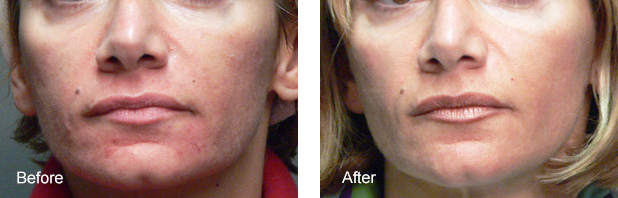
PHOTO-REJUVENATION WITH IPL
Laser and Light Therapy Systems We Use
Nu Vela offers a number of skin laser treatments using state-of-the-art equipment. New lasers allow more energy to be released into the skin, so the overall treatment is more effective, has fewer side effects and provides the safest and best possible alternative to cosmetic surgery.
All skin laser treatments are performed with little or no sedation or local anesthesia and there is minimal bruising, post-treatment pain or risk of scarring. The following are the lasers that are available at the Center:
ClearScan™ (1064 nm YAG™) by Sciton
This laser is the gold standard for all skin types. Dr. Dishakjian uses this laser for laser vein removal and the treatment of almost all vascular lesions.
ThermaScan™ (1319 nm Nd:YAG) by Sciton
This laser is suitable for any skin type including tanned skin. The ThermaScan™ is an infrared laser that effectively treats wrinkles and skin blemishes.
Laser Genesis (1064 nm) by Cutera
This laser offers a no-downtime, multi-purpose, all-skin-type solution for overall skin health. Cutera’s 1064 nm wavelength protects the epidermis, targets microvasculature and stimulates collagen production. With only minimal discomfort, it improves wrinkles by gently heating the dermis; corrects diffuse redness, scars, rosacea; smoothes skin texture, and shrinks pore size.
CoolGlide (1064 nm Nd:YAG) by Cutera
The CoolGlide is the first laser cleared by the FDA for hair reduction that is suitable for all skin types, including tanned skin. Copper cooling provides the most efficient method of cooling for optimal skin protection and comfort, while its large spot size (10 mm) enables maximum speed and optimal penetration at all follicle depths.
Excel (long-pulsed Nd:YAG) by Cutera
This laser is intended for both facial and lower extremity vascular lesions. With an efficient contact copper cooling, Excel effectively and safely treats discrete vessels, high-pressure vessels, and deep veins.
Titan light therapy (1100 nm to 1800 nm) by Cutera
This light system offers a non-surgical solution for skin laxity. It uses light energy to safely tighten the face and other parts of the body by promoting the gradual formation of new collagen while improving skin tone, texture, fine lines, and scars. Best results often require up to three treatments over a period of one year.
SkinTyte light therapy (800 – 1400 nm) by Sciton
This light system acts like Titan light, except that treatment with SkinTyte is faster because it has a larger spot size (15 x 45 mm) and faster repetition rate. Adapters provide added treatment flexibility for smaller areas. Following treatment, a new foundation of collagen is created under the skin leading to its increased firmness.
BBL™ (420 nm to 1400 nm) by Sciton
It is an IPL system equipped with a very efficient cooling system. The broad range of wavelengths and smart filters of the BBL™ allow targeted treatment for many skin conditions including freckles, age spots, cherry angiomas, telangiectasias, rosacea, and deeper lesions.
Solar Genesis by Cutera
This is a pulsed light system which emits visible light that pigmented spots on the skin selectively absorb. Solar Genesis is extremely effective at treating undesired pigment discoloration, such as freckles and sun spots. Exceptional results are achieved in one or two treatments without even using topical anesthetic or gels.
Non-ablative photo-rejuvenation systems like Laser Genesis and BBL™ work by bypassing the surface of the skin and treating the layers underneath; they do not remove the outer skin layers.
Application of Lasers and Light Systems in Cosmetic Surgery
Please go to cosmetic laser surgery to learn more about the applications of laser and light therapy systems in cosmetic surgery.
Laser and Light Therapy FAQs
How is a laser different from ordinary light?
Unlike a light bulb, a laser is a narrow, highly focused, and extremely intense beam of light with unique qualities. The color of the light (or its wavelength) emitted by a laser is determined by the substance (medium) that lies within the laser’s inner chamber.
How does a cosmetic laser target one part of the skin and not another?
Each laser light, characterized by its wavelength, represents a key designed to open only one lock. In cosmetic surgery, wavelength determines which component of the skin (melanin, hemoglobin, or water) will absorb the radiation and how far into the skin laser light will penetrate. The ideal laser to affect a given target is the one maximally absorbed by that target.
How can a laser treat the skin without damaging it?
A cosmetic application of a laser is very demanding. To be useful and obtain the best possible results, the laser must be able to improve the skin texture and remove or destroy the unwanted component without damaging the overall structure of the skin. The three variables—wavelength, power, and pulse duration—of a laser machine, when strategically selected and combined, will provide a remarkable degree of precision in targeting a certain skin component and therefore give the best result.
How does an IPL device target a particular skin condition?
IPL (Intense Pulsed Light) is a gentle photo-rejuvenation and skin treatment device that emits powerful bursts of light energy. The light works much like a laser, but instead of having just one wavelength of light, IPL machines produce a spectrum of light made up of a range of wavelengths. To improve targeting and specificity, such devices often use special filters to remove unwanted wavelengths and keep only those in the required range.
Why can one IPL device treat many different skin conditions?
Since the same IPL device can be used with different wavelength ranges, a single machine may be suitable for treating a number of different conditions by using a different filter and intensity settings. This makes IPL devices more versatile and more cost-effective. On the other hand, lasers remain superior when it comes to high specificity and precise targeting of the skin component.
Published Research on Laser and Light Therapy
In a randomized controlled split-face trial with blinded evaluation, 32 women with Fitzpatrick skin types I to III were randomized to three intense pulsed light treatments at one-month intervals on one side of the face and no treatment on the other. The treatments improved skin texture, telangiectasia (visible small vessels), and irregular pigmentation, but had no efficacy on rhytids (wrinkles); most patients obtained mild or moderate improvements. Adverse events were minimal, but included a scar in one patient, and three patients withdrew from the study because of pain related to treatment.
In a prospective, split-face, single-blinded study, 13 Chinese women had one side of the face treated twice, four weeks apart, with an infrared device with contact cooling (Titan), and the untreated side served as the control. Three months after the second treatment, 41% of patients were identified by two independent observers as having some degree of improvement of the treated side, and the treated side had improved significantly compared with the untreated side. Blistering occurred in one patient and had resolved completely by the three-month follow-up visit.
Sources:
- Hedelund L, Due E, Bjerring P, Wulf HC, Haedersdal M. Skin rejuvenation using intense pulsed light: a randomized controlled split-face trial with blinded response evaluation. Archives of Dermatology. 2006;142(8):985-990.
- Chan HH, Yu CS, Shek S, Yeung CK, Kono T, Wei WI. A prospective, split face, single-blinded study looking at the use of an infrared device with contact cooling in the treatment of skin laxity in Asians. Lasers in Surgery and Medicine. 2008;40(2):146-152.